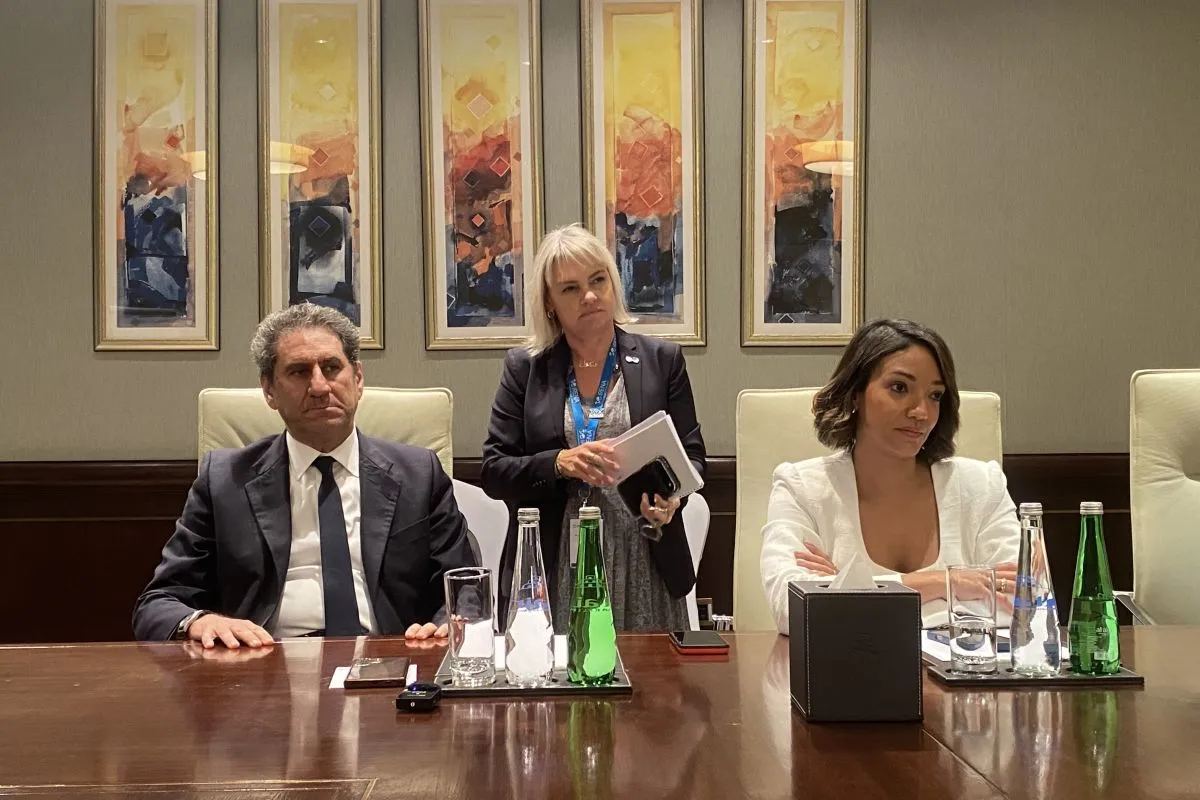
Abu Dhabi (ANTARA) - International Renewable Energy Agency (IRENA) Director-General Francesco La Camera stated that the United States plan to withdraw from the agency will not affect IRENA’s commitment to supporting the energy transition in Southeast Asia.“I don't see an impact on any specific regions. What we see is that this will be 22 percent more in our budgets than it is now,” he told the press on the sidelines of the 16th IRENA Assembly—held as part of Abu Dhabi Sustainability Week hosted by Masdar, in Abu Dhabi, United Arab Emirates, on Sunday.
Le Camera further explained that the US withdrawal process is not yet final, noting that it remains only a presidential memorandum and that IRENA has not yet received any formal notification. The US must still submit an official withdrawal document.
He added that until such a document is received, the United States remains a full member of IRENA with all rights and obligations, including its financial contributions.
However, La Camera said the agency has begun exploring alternative funding sources to anticipate any potential budget shortfall.
If the gap persists before May 2025, the IRENA Council will consider amending the agency’s budget.
He emphasized that developing countries—particularly in Africa and Southeast Asia—remain IRENA’s priority, as these regions face rapidly growing energy demand and are still heavily dependent on fossil fuels.
Baca juga: Keluarnya AS tak pengaruhi komitmen transisi energi di ASEAN
“If we don’t intercept the energy demand of these regions, it will be detrimental to the energy transition and the Paris Agreement goals,” he said.
La Camera described the potential US withdrawal as “very regrettable,” given the country’s role as a major global power and key partner for IRENA.
“But this is what the politics brings sometimes. We have to accept it, and we will strive for doing better,” he said.
Baca juga: UNGA chief says renewable energy shift unstoppable worldwide
US President Donald Trump earlier announced plans to withdraw the United States from 66 UN and international organizations, including several key platforms for climate, energy, humanitarian issues, peace, and democracy.
In a presidential memorandum released by the White House on Wednesday (Jan. 7), Trump said the decision followed a review of “organizations, conventions, and treaties that are contrary to the interests of the United States.”
Pewarta : Shofi Ayudiana
Editor:
I Komang Suparta
COPYRIGHT © ANTARA 2026


