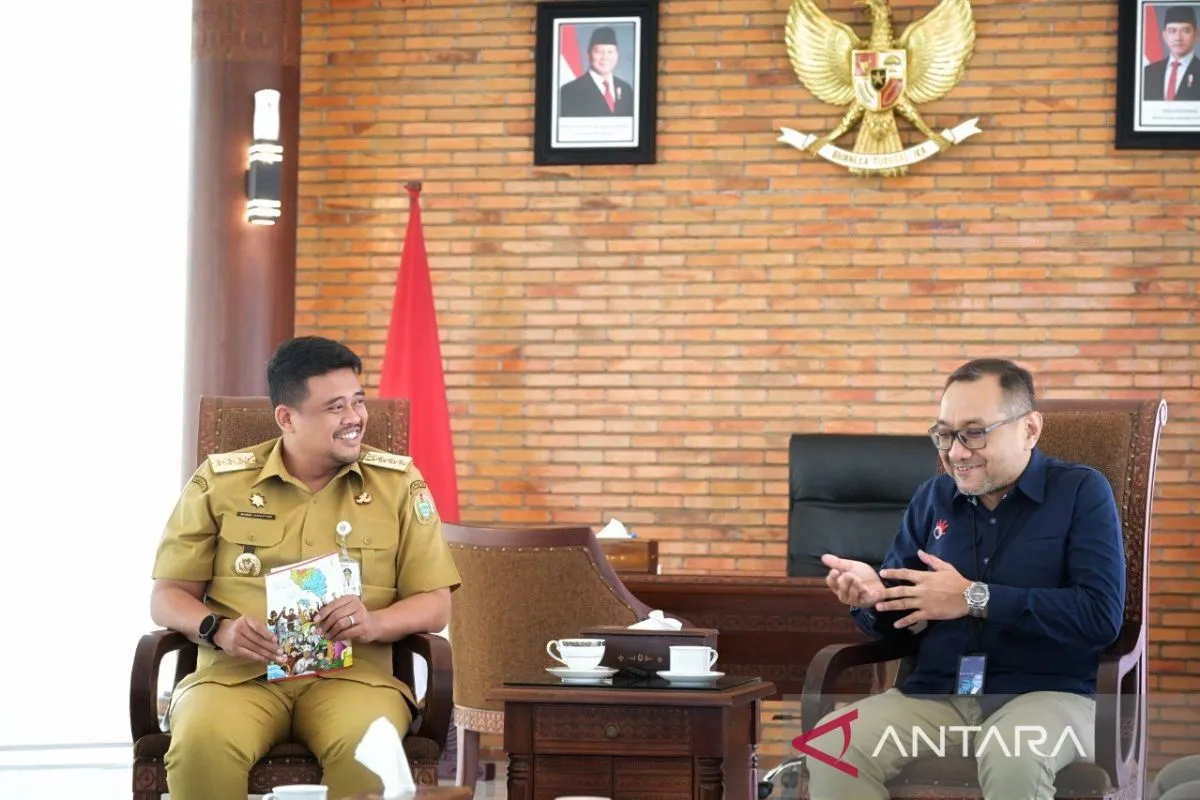
Medan, North Sumatra (ANTARA) - The North Sumatra provincial government is accelerating internet network installation in underdeveloped areas, including Nias Island, to eliminate blank spots and boost digital connectivity.“Currently, we are focusing on underdeveloped regions such as Nias Island. Previously, there were four underdeveloped districts, but now only one remains — North Nias,” Governor Bobby Nasution said during a meeting with state-owned telecom operator Telkom Indonesia on Monday.
He said the initiative is part of the province’s quick-win program to digitalize public services, aiming for faster, more responsive, and solution-oriented governance.
Nasution emphasized the need for cooperation between the provincial government and Telkom to ensure all economic, tourism, rural, and urban areas in North Sumatra have reliable internet coverage. During a recent visit to border areas between North Labuhanbatu and Toba Districts, Nasution said he found several villages lacking both internet and electricity.
“We hope Telkom can support the provincial government in expanding coverage,” he added.
Head of the North Sumatra Communication and Informatics Office Erwin Hotmansah Harahap said that of the province’s 5,662 villages, 62 in 10 districts still have no internet access. The ten districts are Humbang Hasundutan, Dairi, Central Tapanuli, South Tapanuli, South Nias, Karo, Toba, North Tapanuli, Mandailing Natal, and North Padang Lawas.
“Of those 62 villages, 31 are in North Padang Lawas,” he noted.
Baca juga: Surge dan Bali Internet hadirkan Wi-Fi 7
Telkom Regional I Sumatra Executive Vice President Dwi Pratomo Juniarto said the company is ready to collaborate to meet North Sumatra’s connectivity needs.
“We will verify and prioritize the uncovered locations for internet facility development in the province,” Juniarto said.
Baca juga: Sebanyak 33 lokasi di NTB masih mengalami "blank spot"
The effort aligns with Indonesia’s broader push to expand digital infrastructure across remote regions, narrowing the connectivity gap and supporting local economic growth.
Pewarta : Muhammad Said, Raka Adji
Editor:
I Komang Suparta
COPYRIGHT © ANTARA 2026


