


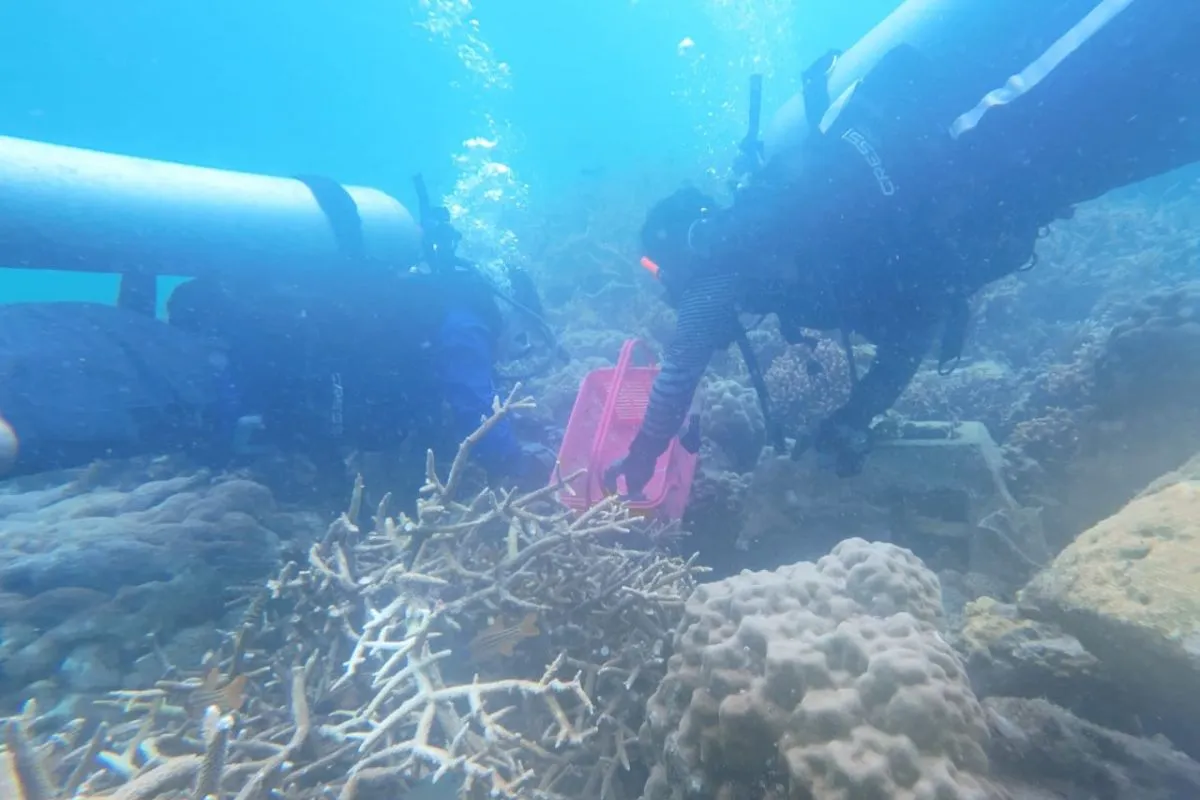
Jakarta (ANTARA) - The Kepulauan Seribu district government in Jakarta Province has transplanted coral reefs in the waters of Pramuka Island, specifically in the Marine Protected Area of Panggang Island, North Seribu.The district government conducted a coral transplantation in the waters of Pramuka Island, specifically within the Marine Protected Area (APL) of Panggang Island, on Friday.
“This coral transplant reflects our commitment to sustaining the marine ecosystem in North Seribu. Coral reefs play a vital role in biodiversity and support coastal communities,” said Nurliati, head of the district's Food, Marine, and Agriculture Office (KPKP), in a statement Friday.
She urged locals and tourists to support marine conservation through environmentally friendly fishing practices and responsible marine tourism activities. Gama Eka Anantha, marine section chief at KPKP North Seribu, explained that 100 coral seedlings were transplanted using the patchwork method in APL Pramuka Island.
“The corals are hard corals, mainly acropora species. Five personnel carried out the activity, and it will continue twice a month,” Gama said.
Baca juga: BPK memeriksa laporan keuangan organisasi internasional CTI-CFF
He added the transplantation aims to accelerate reef recovery and improve the marine ecosystem, particularly in conservation zones.
“Healthy coral reefs help maintain marine biodiversity and provide long-term benefits for both the environment and local communities,” Gama noted.
ANTARA data indicate the total coral reef ecosystem in North Seribu covers roughly 2,100 hectares within the overall 107,000-hectare marine area. This figure represents a geographic estimate rather than the dynamic area of living coral, which changes over time.
Baca juga: Gili Sulat, Gili Lawang Coral Reefs In Alarming State: WCS
The reef area lies within the North Seribu National Park, spanning about 107,489–108,000 hectares, including shallow waters, small islands, shallow reef flats, and other marine zones. This area also includes 1,994 hectares of shallow reef flats and marine zones, 119 hectares of lagoons, 18 hectares of straits, and five hectares of bays that make up the shallow coral structures.
Regarding Indonesia’s efforts to preserve its coral reefs, ANTARA noted that the government has, since 1998, initiated the protection and restoration of marine ecosystems through the Coral Reef Rehabilitation and Management Program (COREMAP), funded by loans and grants.


